
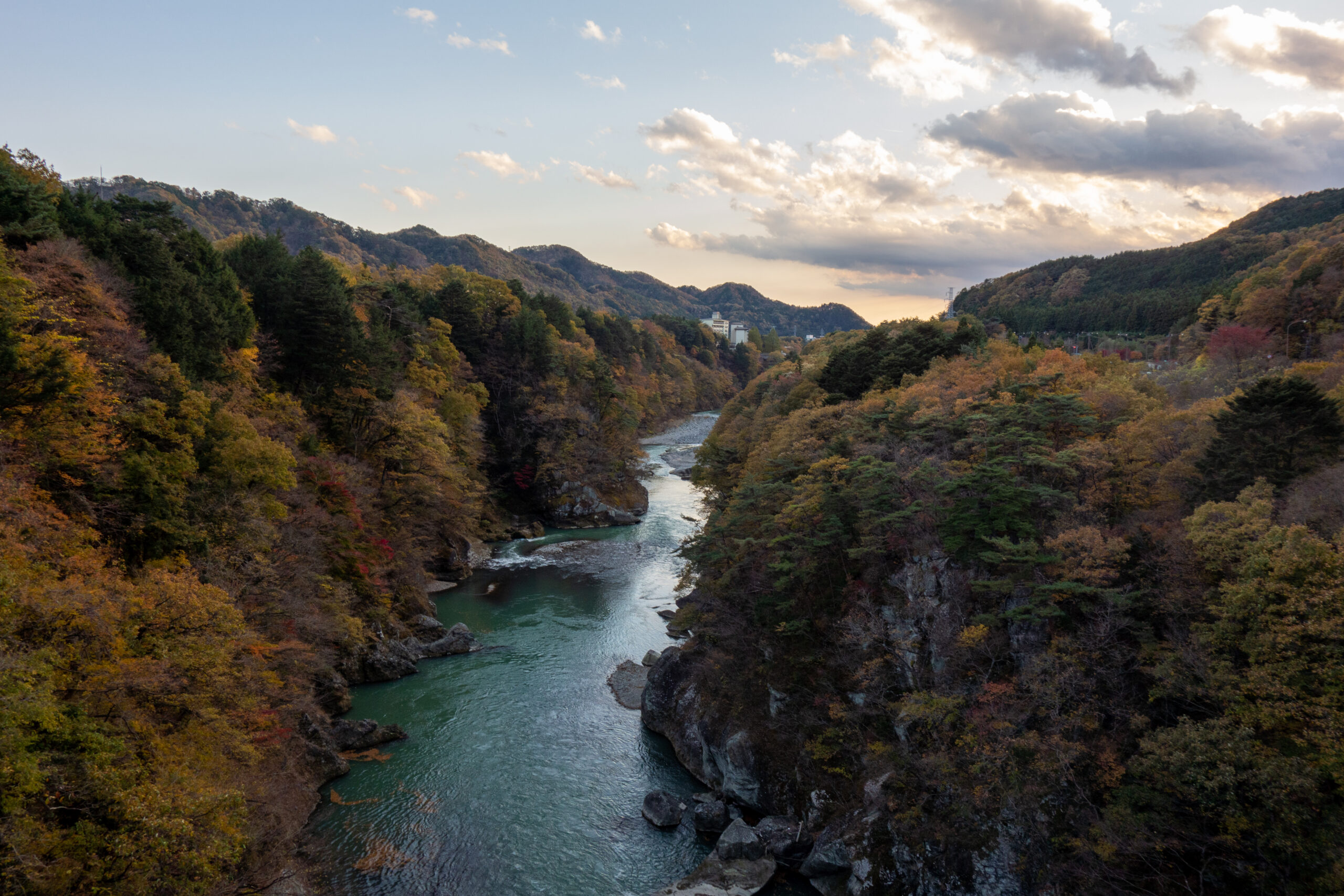
Kinugawa Onsen is located in Nikko City, Tochigi Prefecture, and is one of the representative hot spring resorts in the Kanto region.
Kinugawa Onsen is at the upper reaches of the Kinugawa River and is characterized by the sight of hotels lining the valley.
It is a popular tourist destination from the standpoint of accessibility, as it is only about two hours by express train from Asakusa, Tokyo.
 Kinugawa-onsen Station
About Kinugawa Onsen
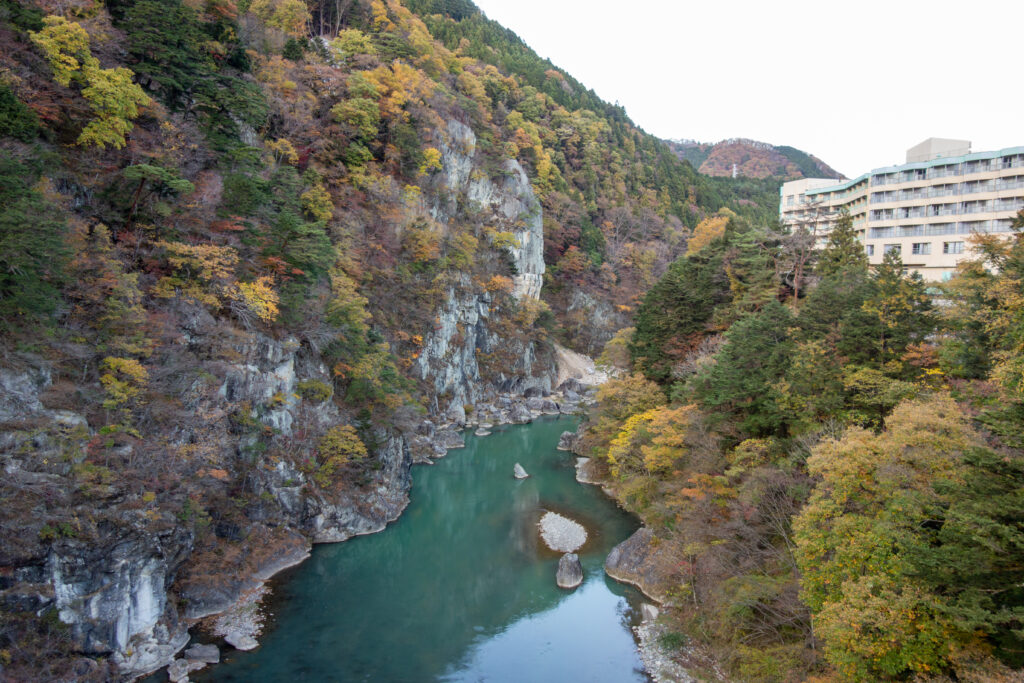
Kinugawa Onsen began when a hot spring was discovered in 1691, during the Edo period (1603-1867). At that time, the hot springs were located only on the west bank of the Kinugawa River and were called “Taki Onsen”.
Kinugawa Onsen was a hot spring during the Edo period, when only a limited number of people, such as feudal lords visiting Nikko and priests of Mount Nikko, were allowed to bathe in it.
Later, during the Meiji period (1868-1912), it was opened to the general public, and a hot spring called “Fujiwara Onsen” was discovered on the east bank of the Kinugawa River.
In 1927, “Taki Onsen” and “Fujiwara Onsen” were combined and called Kinugawa Onsen.
And in 1929, the Kinugawa Onsen was connected to Tokyo by railroad, and Kinugawa Onsen began to develop.
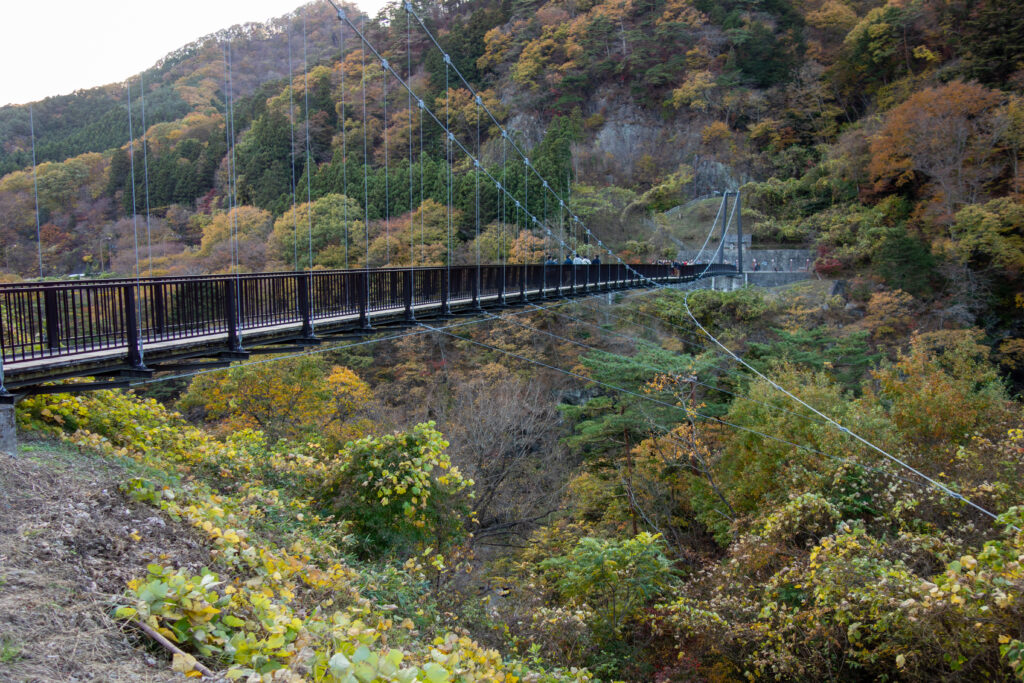 Kinutateiwaotsuri Bridge
Kinugawa Onsen’s hot spring quality
Kinugawa Onsen’s hot spring is a natural alkaline simple spring, clear, colorless, tasteless, odorless, and smooth to the touch.
Kinugawa Onsen has long been said to be effective against burns.
It is also said to be effective for skin diseases and gastrointestinal ailments, as well as for neuralgia, rheumatism, and other nervous system ailments.
